How Regional Licensing Shapes the Structure of Initial Player Rewards in Digital Casinos
Jakob Russell · Aug 21, 2026
How Regional Licensing Shapes the Structure of Initial Player Rewards in Digital Casinos
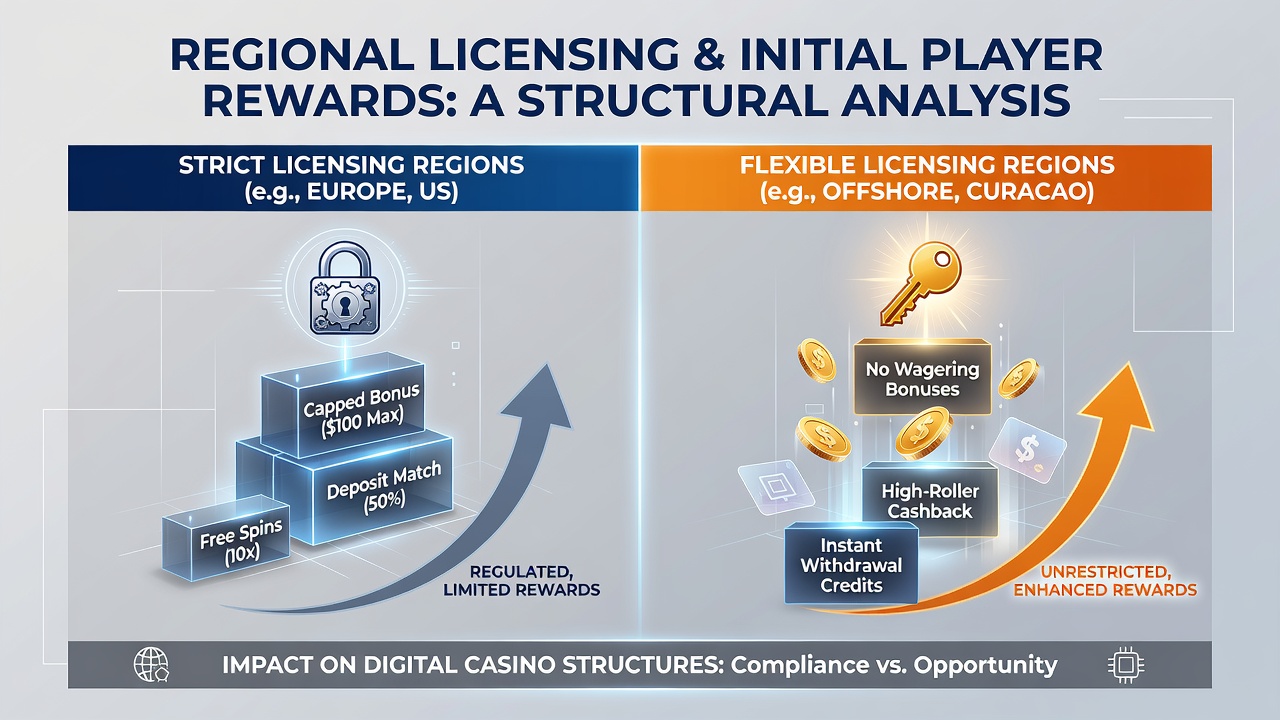
Licensing authorities across different regions impose distinct rules that directly determine the format, size, and eligibility conditions attached to initial player rewards in digital casinos, and operators must align their welcome packages with these requirements before launching services in any given market. Data from regulatory filings shows that bonus structures vary sharply between European, North American, and Asian jurisdictions because each licensing body sets its own caps on deposit matches, free spin quantities, and withdrawal limits tied to those offers.
Core Licensing Mechanisms and Their Direct Effects
Authorities such as the Malta Gaming Authority require operators to maintain transparent terms for all promotional rewards, which means initial sign-up bonuses often carry fixed wagering multipliers and game contribution percentages that appear in every player agreement. In contrast, state-level regulators in the United States enforce stricter geographic restrictions that limit bonus availability to verified residents, and this creates reward structures where maximum win caps apply only to players within approved borders. Observers note that these differences force platforms to maintain separate bonus engines for each licensed territory rather than offering uniform global promotions.
Canadian provincial frameworks, including those managed through iGaming Ontario, mandate that initial rewards exclude certain high-volatility games from contributing toward wagering requirements, and this rule shapes the way operators present free spins or matched deposits to new accounts. Figures released by industry analysts indicate that platforms operating under multiple licenses adjust their reward tiers accordingly, often reducing the percentage of bonus funds that convert into cashable amounts when cross-border compliance becomes necessary.
Regional Variations in Bonus Construction
European markets licensed under the Malta Gaming Authority typically allow higher percentage deposit matches paired with moderate wagering thresholds, whereas U.S. state licenses frequently impose lower match percentages alongside game-specific restrictions that limit how quickly players can clear requirements. Research from the European Gaming and Betting Association reveals that these patterns emerged clearly in licensing renewals processed during 2025, with operators reporting adjusted reward formulas to satisfy each jurisdiction's consumer protection standards. Asian regulatory environments add another layer because many require that initial rewards remain non-transferable across accounts, which eliminates referral-style bonuses that appear in other regions.
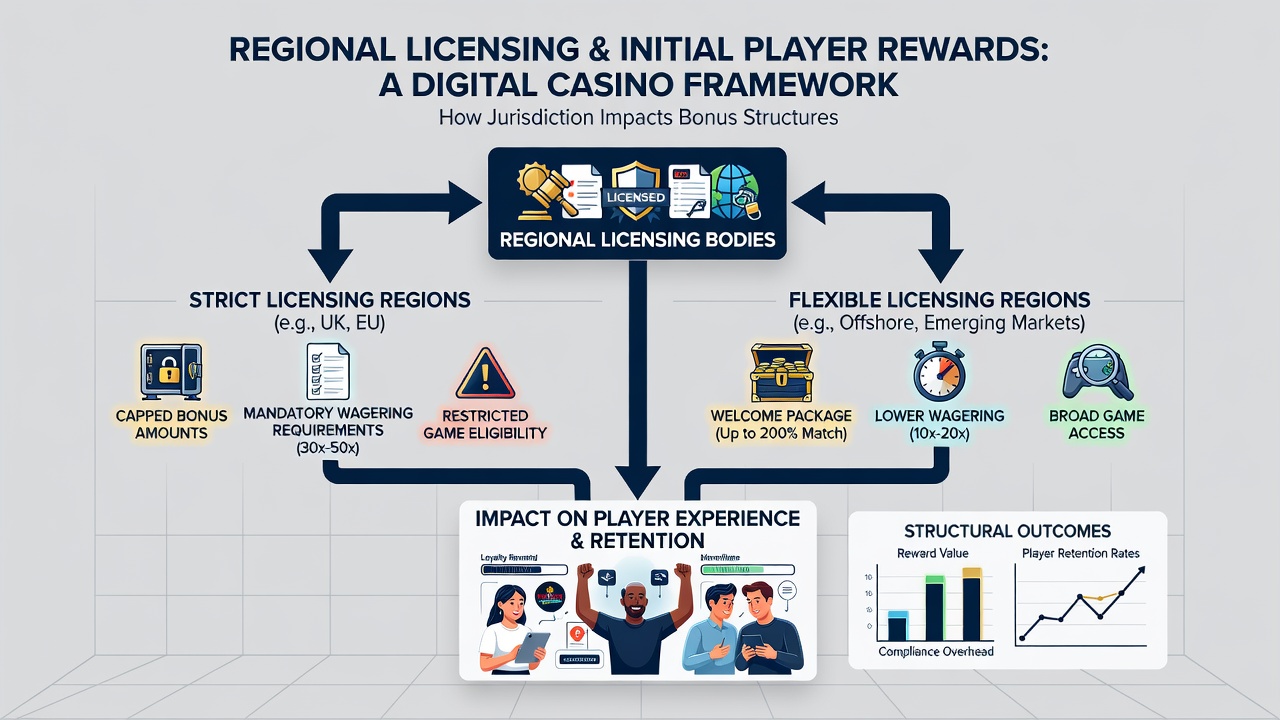
Operators that hold licenses in both Malta and New Jersey must therefore run parallel reward systems, and data compiled through August 2026 shows that this dual approach increases administrative costs while narrowing the scope of eligible games within each welcome package. Those who've examined compliance reports observe that the same platform might offer 100 percent deposit matches in one market yet cap the same promotion at 50 percent under another license simply to meet local fairness criteria.
Compliance-Driven Adjustments to Reward Terms
Every licensing body requires operators to publish the full terms of initial rewards before players register, and this transparency rule has led to standardized disclosure formats that list eligible payment methods, maximum bonus amounts, and time limits for completing wagering. Platforms adjust free spin quantities and cashback percentages accordingly, with some jurisdictions requiring that winnings from no-deposit rewards carry higher playthrough thresholds than deposit-based offers. Industry reports confirm that these mandated disclosures reduce the frequency of bonus misuse while compelling operators to recalibrate reward values to remain competitive within each regulated space.
Cross-licensed operators often segment their player databases by jurisdiction so that initial reward offers display only the structures permitted under the active license, and this segmentation appears in backend systems that activate different bonus codes depending on the player's verified location. Evidence gathered from platform audits indicates that such technical segmentation became standard practice after several markets tightened rules around bonus transparency in late 2025.
Conclusion
Regional licensing continues to dictate the precise architecture of initial player rewards through caps, wagering rules, and game eligibility lists that operators must implement before any promotion reaches new accounts. Data collected across multiple jurisdictions demonstrates that platforms maintain distinct reward engines calibrated to each license, and these variations persist because regulatory bodies prioritize local consumer protections over uniform global standards. As markets evolve, operators will keep refining their initial reward structures to satisfy the specific requirements attached to every active license.